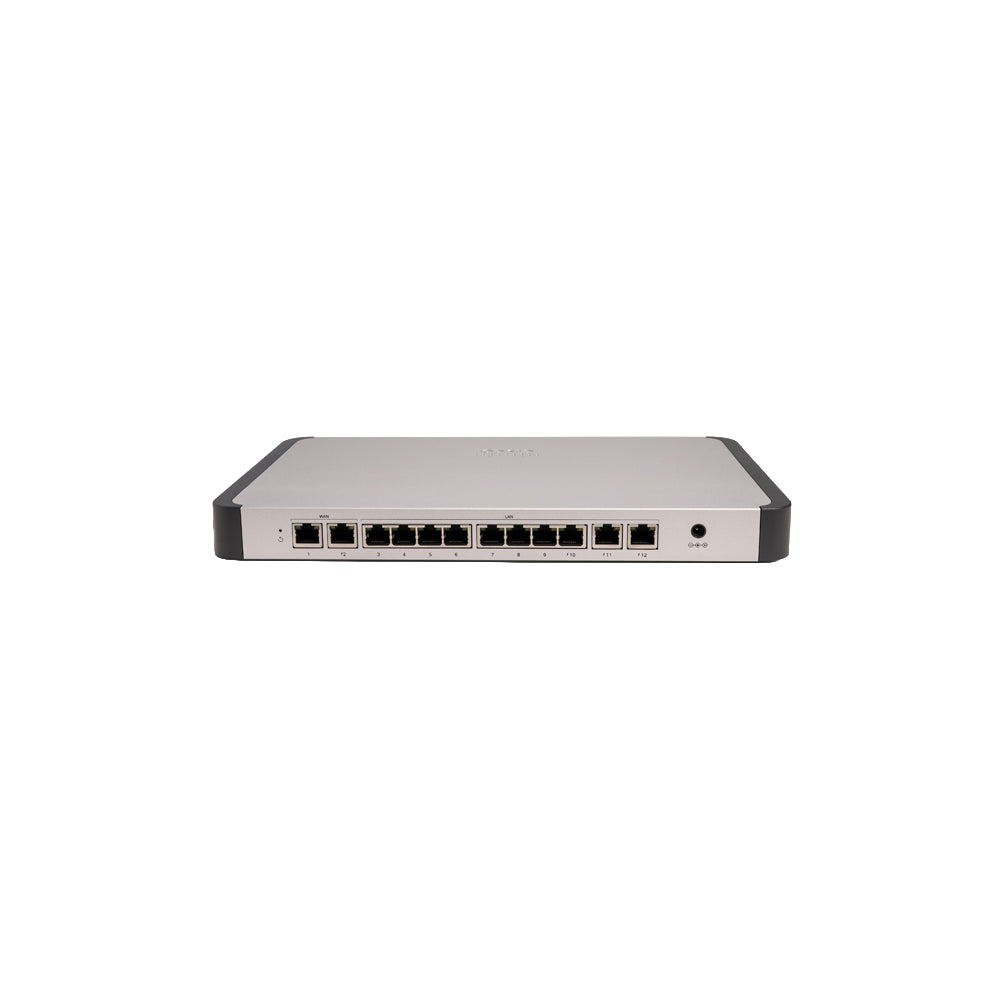

Cisco Meraki 8121-CW-G2 Security Appliance | C8121-CW-G2-MX
£2,685.38 inc VAT
C8121-CW-G2-MX
Availability:
Couldn't load pickup availability
The Cisco Meraki C8121-CW-G2-MX is a cloud managed router/security appliance with 5G & Wi-Fi 6 for small to medium branch for up to 200 devices.
Key Features- Up to 2Gbps stateful firewall throughput and 1.2Gbps site-to-site VPN throughput
- Integrated 5G Standalone / CAT20 LTE modem for primary or backup uplink
- Built-in dual-band 2×2 Wi-Fi 6 wireless connectivity
- 2 × 2.5GbE RJ45 WAN ports, with 1 × 30W PoE+ port
- 10 × Gigabit RJ45 LAN ports, including 3 × 45W PoE-capable ports
- Centralised Cisco Meraki Dashboard configuration and remote monitoring
- Meraki AutoVPN, SD-WAN and automated WAN failover
- Firewall, intrusion prevention and content filtering functionality (licence-dependent)
Options
Security Appliance Licences (Mandatory)
Meraki Systems Manager
Transceiver Modules
Downloads
Datasheet
Meraki Sizing Tool
About This Product
The Cisco C8121-CW-G2-MX is an all-in-one cloud-managed router designed for branch locations that need flexible connectivity without a collection of separate appliances. It combines secure Meraki MX OS routing, dual-band Wi-Fi 6 and integrated 5G cellular networking, making it particularly useful for retail premises, remote offices and sites where access continuity is important.
Wired, Wireless & Cellular Access
Ten Gigabit Ethernet LAN ports support local devices, with three 45W PoE-capable ports available for compatible equipment. Built-in 2×2 Wi-Fi 6 provides wireless connectivity, while two 2.5GbE WAN ports and a 5G Standalone/CAT20 LTE modem offer options for primary internet service and cellular failover. This combination simplifies branch deployments and reduces reliance on additional networking hardware.
Centralised Management & Security
Cisco Meraki Dashboard provides remote configuration, visibility into network activity and tools for troubleshooting distributed sites. AutoVPN helps establish encrypted links between locations, while SD-WAN can direct important application traffic over suitable uplinks. Firewall policies and optional licence-dependent security services, including content filtering and intrusion prevention, support consistent protection as the network grows.