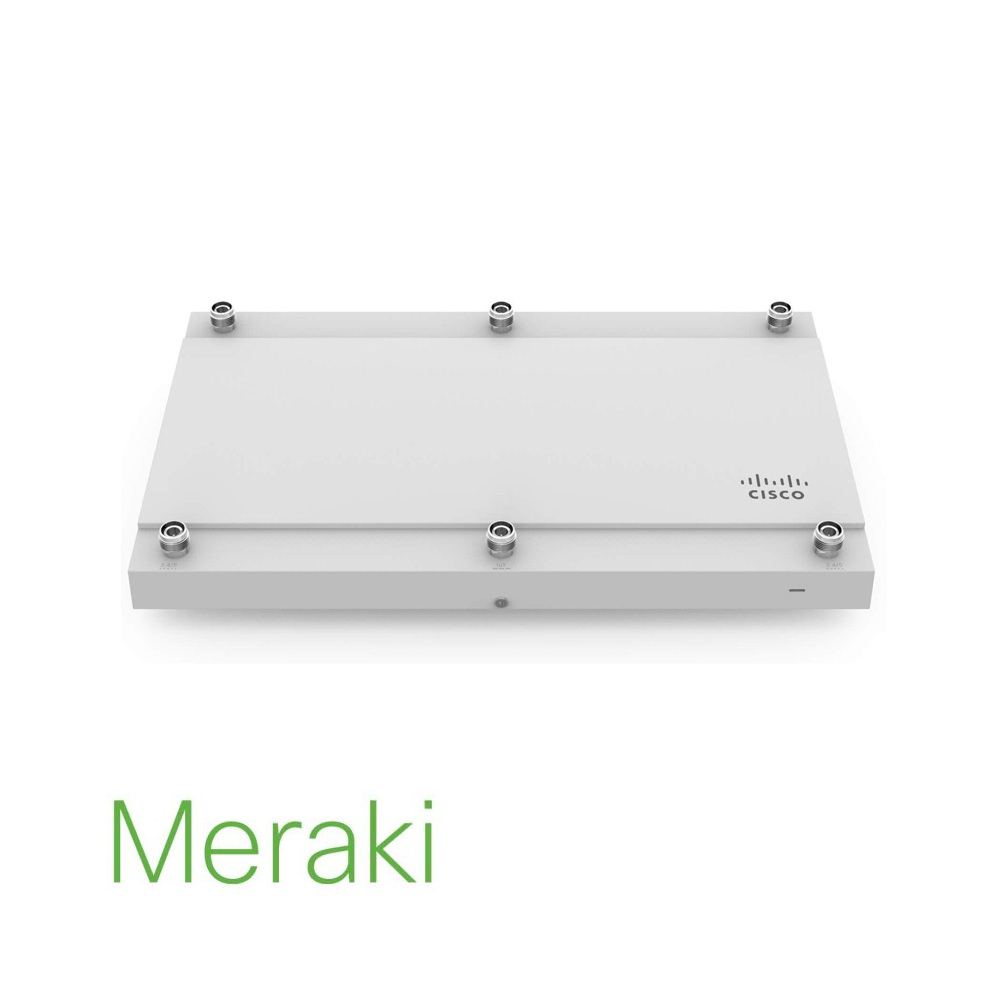

Meraki MR53E Indoor 802.11ac Access Point | MR53E-HW | EOL
£996.86 inc VAT
MR53E-HW
Availability:
Couldn't load pickup availability
This is now EOL and the suggested replacement is CLICK HERE
Key Features
- External antenna connectors
- 4 x 4 80 MHz MU-MIMO 802.11ac Wave 2
- 2.5 Gbps dual-radio aggregate frame rate
- Multigigabit ethernet
- 24 x 7 real-time WIPS/WIDS and spectrum analytics via dedicated third radio
- Integrated Bluetooth Low Energy Beacon and scanning radio
- Enhanced transmit power and receive sensitivity
- Full-time Wifi location tracking via dedicated 3rd radio
- Integrated enterprise security and guest access
- Application-aware traffic shaping
- Self-configuring, plug-and-play deployment
- Sleek, low-profile design blends into office environments
- Optimized for voice and video
Downloads
About This Product
The Cisco Meraki MR53E is a cloud-managed 4x4:4 802.11ac Wave 2 access point with 80 MHz channels and MU-MIMO support. Designed for demanding next-generation deployments in busy offices, schools, hospitals, stadiums, factories, warehouses, and other venues, the MR53E offers high performance, enterprise-grade security, and simple management. The MR53E provides a maximum of 2.5 Gbps* aggregate frame rate with concurrent 2.4 GHz and 5 GHz radios. A dedicated third radio provides real-time WIDS/WIPS with automated RF optimization, and a fourth integrated radio delivers Bluetooth Low Energy (BLE) scanning and Beaconing.
The MR53E supports a variety of smart, auto-detectable external antenna that can deliver both focused, targeted coverage in challenging RF scenarios as well as broader coverage in a variety of environments, including those with very high ceilings. These antenna include panel and panel downtilt omnidirectionals, wide patch, and narrow patch options.
With the combination of cloud management, best-in-class hardware, multiple radios, and advanced software features that leverage the intelligence and power of the Meraki cloud, the MR53E makes an outstanding platform for the most challenging use cases — including high-density deployments and bandwidth or performance-critical applications like voice and high-definition video.